Friday, 2 December 2011

Transformation-Ready: The strategic application of ICTs in Africa

This inception report produced on behalf of the World Bank Group and the African Development Bank, with the support of the African Union, intends to produce a new flagship report on how information and communication technologies (ICTs), have the potential to change public service delivery in Africa. The overall goal is to raise awareness and stimulate action, especially among African governments and development practitioners, of how ICTs can contribute to the improvement and transformation in the realm of public service delivery.
The study will recommend ways by which to scale up successful application of ICTs in public service delivery and to further operationalize its use within the public sector, while paying appropriate attention to associated risks. The aim is to identify specific opportunities and challenges in Africa that can possibly be addressed through an increased or more efficient use of ICT, benefitting from a best practice analysis of applications around the world.

Pedagogical Integration of ICT: Successes and Challenges from 100+ African Schools - 3rd edition

The PanAfrican Research Agenda aimed to better understand how the pedagogical integration of ICT can improve the quality of teaching and learning in Africa.

In the first project phase, national research teams gathered data on the educational use of ICT in 13 countries: Ghana, Gambia, Senegal, Central African Republic, Uganda, Mozambique, Mali, Kenya, Ivory Coast, Congo, Cameroon, and South Africa, and Zambia. Data were collected according to a mixed-method approach, using quantitative data (e.g., questionnaires) and qualitative data (e.g., interviews, observations) on how ICT were integrated into education. In all, 120 schools, 800 school administrators, 8 940 teachers, and 242 873 students participated in the project.

Phase 1 of the PanAf project primarily involved collecting 20,000 pieces of data following a rigorous indicator procedure that was determined based on the literature as well several meetings between the researchers from the participating countries. All the gathered data are available on the Observatory for the pedagogical integration of ICT at www.observatoiretic.org (briefly presented in section VI).
Analyses of the raw data are also provided at the Observatory, and are available not only to PanAf researchers, but to all researchers in Africa and around the world. The clear advantage of these data, beyond being freely accessible at all times, is that they allow a deeper understanding of Africa's ICT policies and a greater awareness of the impacts of ICT on learners and educators. Note that these data frequently highlight gender issues and uncover inequalities throughout education systems. Last but not least, phase 1 of the PanAf project has fostered the development of research skills in the project teams.
http://www.ernwaca.org/panaf/IMG/pdf/book-ict-pedagogical-integration-africa.pdf 

Report on the Policy Community Survey

What kind of information do national policy actors need, and how do they access it? What are their perceptions of the quality, value, and availability of research findings produced by think tanks in general, and specifically those funded by the Think Tank Initiative? To help answer questions such as these, the Initiative undertook a Policy Community Survey between 2009 and 2011 in all countries in Africa, South Asia, and Latin America where the program is engaged. The survey found that in South Asia and Latin America, think tanks are among the most frequently used sources of information that stakeholders draw on for evidence. In comparison, think tanks are much less used by African stakeholders, who are more likely to rely on relevant government ministries and international agencies for their information needs.

Think Tanks: At Work – 2010-2011

In its latest Annual Report, the Think Tank Initiative reflects on its third year of programming and showcases the institutions it supports. The Think Tank Initiative supports 51 independent policy research institutions in the developing world. They strengthen public policy debates and promote more objective, evidence-based decision-making to help improve the lives of their fellow citizens.

Zero child hunger: breaking the cycle of malnutrition

Six million children die of hunger every year. Over 40 per cent of children under five in countries such as Bangladesh, Ethiopia, India, Nepal and Niger are stunted. Children that do survive are more likely to have heart disease, diabetes and renal damage.

Many solutions to malnutrition are nutrition-focused agricultural interventions like bio-fortification, home gardens, dairy and livestock development and aquaculture.The first issue of the 3ie-IDS brief Evidence Matters addresses the fundamental question of whether there is sufficient evidence to show that increased household income and better diets improve children’s nutritional status.

Policy brief on climate change and agriculture

World Farmers’ Organization supports through this policy brief the call to action on Climate-Smart Agriculture, offering the triple wins of increased food production, climate change mitigation and adaptation. It asserts that an incentive-based approach to climate mitigation and adaptation, as opposed to a penalty-based approach, will have a positive long-term effect on the modernization and sustainability of the agricultural sector. 

This document was published and presented at COP 17, where the COP should recommend an agriculture work program.

review of agricultural interventions that aim to improve nutritional status of children

This report is a systematic review of the impact of potential „win-win‟ agricultural interventions that aim to improve children‟s nutritional status by improving the incomes and the diet of the rural poor. 

It builds on and expands previous reviews by covering the period 1990-2010 and finds results similar to those of previous reviews, but attributes the lack of impact of agricultural interventions on child nutrition to methodological weaknesses of the studies reviewed rather than to specific characteristics of these interventions.

Rogue aid? The determinants of China’s aid allocation

Foreign aid from China is often characterized as ‘rogue aid’ that is not guided by recipient need but by China’s national interests alone. However, no econometric study so far confronts this claim with data. The study finds that political considerations are an important determinant of China’s allocation of aid. However, in comparison to other donors, China does not pay substantially more attention to politics. In contrast to widespread perceptions, the study finds no evidence that China’s aid allocation is dominated by natural resource endowments. Moreover, China’s allocation of aid seems to be widely independent of democracy and governance in recipient countries. Overall, denominating aid from China as ‘rogue aid’ seems unjustified.

According to the Financial Times, China outperformed the World Bank as the world’s largest provider of overseas loans to developing countries through its China Development Bank and China Export-Import Bank amounting to at least US$110 billion in 2009 and 2010. Tanzania was the single most important recipient of Chinese economic aid between 1956 and 1987. 62.0% of China’s economic aid between 1956 and 1987 has been provided to Africa, highlighting China’s aspirations to become the leading power in the Third World. 22.7% of China’s economic aid in this period were provided to Asia, with the intention of creating “friendly relations with its closest neighbours”.
https://ncgg.princeton.edu/IPES/2011/papers/F1120_rm3.pdf 

The role of mobile-enabled social media in social development

A number of countries recently experienced protests organized by citizens that were in pursuit of accountability and openness from government. It was witnessed that social media played a highly important role in those events; among others, continuously providing updated information, establishing human networks, forming opinions, mobilizing people, and taking concerted actions.

Of course, social media is not the sole reason that made the events happen. However, it can be at least said that the general public were encouraged to move into the actions for their enhanced well-being. From a broader perspective, those occurrences also showcase that Information & Communications Technologies (ICTs) can help enhance social development among people.

This short note seeks to develop analysis on the role of social media in social development, in the wake of the increasing diffusion of mobile phone Internet access.
http://www.mobileactive.org/files/file_uploads/Mobile_Enabled_Social_Media.pdf 

Impact investing: A framework for policy design and analysis

Impact Investing: A Framework for Policy Design and Analysis, represents a framework for thinking about the role government policy can play in creating an enabling environment for impact investing. This report answers the question, "How can policy policymakers, investors, and civil society better develop and analyze impact investing policies?" http://www.thegiin.org/binary-data/RESOURCE/download_file/000/000/173-1.pdf 

Data centres: their use, value and impact

This report provides an analysis of the usage and impact of a number of research data centres, representing a cross-section of research disciplines in the UK. The study aimed to demonstrate the importance, relevance and benefits of effective sharing and curation of research data for the UK research community. It looked at the long-term usage and impact of data curated by a cross-disciplinary selection of established data centres.

Using quantitative and qualitative approaches, the study gathered evidence on the extent data centres have been useful to the research community. As part of a wider body of work, this evidence will help to build a case for improving data sharing practice in the UK.
http://www.rin.ac.uk/system/files/attachments/Data_Centres_Report.pdf 

Reproductive Health and Rights: The Facts of Life

The worldwide trend toward smaller families—average family size has declined by half since1950i — is linked to advances in education and health care and increased opportunities for women. This great global success story can continue only if access to family planning continues to grow worldwide. Providing quality reproductive health care and other economic and social encouragements for safe motherhood is a cost-effective strategy that can also help countries concerned about low fertility rates. http://www.7billionactions.org/uploads/browser/files/7b_factsheets_reproductive_health_v5.pdf

Global HIV/AIDS Response : Progress Report 2011

Global progress in both preventing and treating HIV emphasizes the benefits of sustaining investment in HIV/AIDS over the longer term. The latest report by the World Health Organization (WHO), UNICEF and UNAIDS Report on the Global HIV/AIDS Response indicates that increased access to HIV services resulted in a 15% reduction of new infections over the past decade and a 22% decline in AIDS-related deaths in the last five years.

"It has taken the world ten years to achieve this level of momentum," says Gottfried Hirnschall, Director of WHO's HIV Department. "There is now a very real possibility of getting ahead of the epidemic. But this can only be achieved by both sustaining and accelerating this momentum over the next decade and beyond."

Advances in HIV science and programme innovations over the past year add hope for future progress. In times of economic austerity it will be essential to rapidly apply new science, technologies and approaches to improve the efficiency and effectiveness of HIV programmes in countries.
http://www.unaids.org/en/media/unaids/contentassets/documents/unaidspublication/2011/20111130_UA_Report_en.pdf
 

World AIDS Day campaign 2011: Leading with Science, Uniting for Action

As we mark 30 years of AIDS, let’s be inspired by the early days of AIDS activism. AIDS has proven to be much more than an epidemic—it is a movement that has inspired people across the world. This movement is more important now than ever. The beginning of the end of AIDS is now in sight – we must get to Zero new HIV infections, Zero discrimination, Zero AIDS-related deaths http://www.unaids.org/en/ourwork/managementandexternalrelationsbranch/deputyexecutivedirectormanagementandexternalrelations/officeofglobaloutreachandparliamentaryrelations/2011wadcampaign/ 

Saturday, 19 November 2011

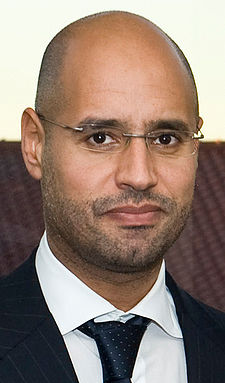
Saif Al-Islam cannot get a fair trial in Libya yet he deserves one


Dear folks,
Saif Al-Islam is in the hands of the Libyan authorities but I don’t think he is enjoying his food right now. A lot of people may not understand why I still support NTC after the way they handled Gaddafi on capturing him but let’s give them more time. To be fair, they are doing better than some people expected.  Yes, militias are still independently controlling some regions but I’m still optimistic that the situation will change for the better. I’m not like the owner of the Independent Magazine, Andrew Mwenda, who has been exaggerating on capitalfm from the start that Libyans will slaughter themselves as it is in Somalia, as soon as Kaddafi goes. These guys seem to be a bit more organized and nationalistic compared to the Iraqis after the fall of Saddam Hussein or Afhaganistanis after the fall of the Taliban.

I'm, however, a bit worried that Saif Al-Islam may not get a fair trial in Libya because there are a lot of emotions running deep in the country as far as the Gaddafi family are concerned. The ICC still has an upper hand over this if they sense that Saif may not get a fair trial in Libya but the international laws allow the host country to try their guy first if they assure the ICC that he or she will be given a fair trial.

Let us also remember that ICC lost some kind of credibility as far as project ‘Saif-Al-Islam’ is concerned. The court was viciously ridiculed by critics after it “confirmed” Saif’s capture by rebels in August, saying it was in the process of bringing him to The Hague for trial. He embarrassed them when he appeared in a Tripoli hotel — supposedly under rebel control —later that day to lead a crowd of cheering supporters and foreign journalists on a tour of the city.

 I don’t know which kind of evidence the ICC or the Libyans have got against Saif but by the look of things so far, it looks like the evidence is not as strong as the one Ugandans have reportedly got against our first son, Muhoozi Kainerugaba. Gaddafi tried to keep him away from military affairs as he was mainly responsible for the financial management of the country’s affairs rather than military or intelligence. It was the other brothers that were reportedly more involved in military and intelligence affairs.

That's why I still think that president Museveni made a mistake to involve Muhoozi in the military because it is very easy for anyone to build a case against you if you are involved in matters of life and death. Already people are saying he is responsible for the death of people at Kasubi tombs and somewhere in Karamoja, and it’s kind of difficult for any judge to rule against that if your father is no longer in power. Judges are human beings like anybody else, you know.

So, I think Saif should be handed over to ICC but that is a real dream because there are people who want to see his neck on a platter. Even the two tribes: Gadhafi and Waffala tribes, that highly protected him, cannot protect him anymore while in Libya.

There is an argument that people like: Osama Bin Laden, Saddam Hussein, Gaddafi and their sons will never have a fair trial anywhere in the world. The end result is always the same: death. So, instead of wasting people’s time and money, they are usually eliminated on the spot. They are usually assassinated as soon as troops find them hiding in some cave, drainage or house somewhere. For instance, Saddam’s sons were shot down on the spot but their father got a ‘fair trial’ that ended with his death. The Saddam supporters could not argue that he did not get a fair trial; after all, he continually received 100 percent of the votes during Iraqi elections.  They loved him there!  On the other hand, Gaddafi and two of his sons were killed on the spot but Saif Al-Islam may also end up with another ‘fair trial’ with the same predicament as Saddam’s if he is tried in Libya.

What do you think would be the reaction in the U.S. if Osama bin Laden got a smart lawyer like USA’s Johnnie Cochran (RIP) or Uganda’s David Mpanga, and got himself acquitted like O.J Simpson. It is possible for anybody ‘guilty’ to walk out of the court ‘not guilty’ with a good lawyer. There is something in legal terms called "exclusionary rule" where even perfectly good evidence can be thrown out on the basis that it was illegally obtained. I don’t know whether we have got this too in Uganda but it is common in developed nations. A murderer who confesses his crime can still be acquitted simply because the cop forgot to read him his rights first.

Nonetheless, I personally still think people deserve a fair trial whatever the circumstances and I can’t see Saif Al-Islam getting one in Libya. Let us examine one historical trial in USA where Alger Hiss, an American lawyer who was one of the founders of the UN, was accused of being a Soviet spy in 1948 and convicted of perjury in connection with this charge in 1950. There was massive government misconduct against Hiss, including: 1. An FBI agent who knowingly lied on the witness stand, 2. the withholding of evidence by the FBI which would have acquitted Hiss, and 3. the infiltration of the Hiss defence team by the FBI. The Hiss defence team contained an FBI informant.

If any of these three major areas of government misconduct had come to light at the time, the Judge would have declared a mistrial and he probably would have prohibited any further prosecution of Hiss by the government. The single witness against Hiss, Whittaker Chambers, had changed his story many times, including his grand jury testimony, in effect making him guilty of perjury, had the government prosecuted him.  

Hiss spent the rest of his life trying to clear his name,  and struck pay dirt with the Freedom of Information Act,  when, in the mid-1970s, the knowledge of government  misconduct at his trial became public. Courts reversed his disbarment and he was allowed to practice law again.

Unfortunately for Hiss, when his case finally reached the Supreme Court, it was loaded with Nixon appointees.  Rather than confirm Nixon's deceit in convicting an innocent man, the Supreme Court let the Hiss conviction stand. Hiss died shortly thereafter (in 1996).

 So, we all need a fair trial whatever our backgrounds. Hopefully, Ugandans treat the Museveni family fairly in case the Libyan experiment becomes a reality in Uganda some day.

Byebyo ebyange

Abbey Kibirige Semuwemba