Showing posts with label Museveni. Show all posts

Tuesday, 6 March 2012

To understand Museveni and Uganda’s decadence, read him dialectically

Let me begin with this statement to clear the air. In analyzing Uganda I have decided to use Museveni because my research has led me to conclude that Museveni is the governing party, the cabinet, parliament and the appointing authority (some people are refusing to leave their jobs on account of incompetence or corruption unless the appointing authority says so). But I refer to Museveni in his public, not private capacity.

President Museveni gave Ugandans hope during the bush war and a few years after he assumed power. He formed a government of national unity. He said all the right things. He announced that the people of Uganda were sovereign and government the servant of the people. The army would protect the territory and defend the people against external aggression. He wanted religion out of politics. He repeated that his administration would eradicate, not reduce, poverty. At one time he expressed genuine concern that economic growth was not trickling down to the masses. He launched barter trade to overcome classical international trade problems. He was firm about ending corruption, sectarianism and mismanagement. He criticized leaders who stayed in power too long and wasted public funds on imported furniture, hosting huge parties and travelling expensively while Ugandans had no shoes. He did not even want to wear western suits. He wanted to be one of the ordinary people who sheltered and fed him during the bush war. He said his administration would be a short one because he wanted to operate on the Pan-African stage. He told the nation that his training in political economy prepared him adequately to address Uganda challenges. He stressed that Uganda would be metamorphosed, become industrialized with a middle class society. Education, healthcare, nutrition, science and technology and infrastructure and environmental management would lead the way. He added that Ugandans would choose their leaders in periodic free and fair elections. He confirmed that his administration would be based on individual merit and the sky would be the limit. Perfect!

Museveni who came to power with little domestic and external support began to attract attention. After adopting structural adjustment ideology in 1987, Uganda received massive external support in money and advisers and experts in key ministries particularly finance and central bank. External media and diplomacy covered him very well. He was christened the darling of the west, a star pupil, dean of the new breed of African leaders and stabilizer of the great lakes region. Sadly, after 26 years of Museveni’s leadership, Uganda has reaped misery, marginalization and despair. To confirm this unhappy outcome just talk to Ugandans even those in the cabinet and parliament on the NRM side, read newspapers and listen to the radio when people call in and increasingly to international observers. How do we explain this paradox of noble promises and poor end results? To find the answer you need to be dialectical: look at the incomplete actions disguised as achievements, not the speeches.

Museveni came to power with a hidden agenda: to stay in power for life and create a dynasty and use it to create a Tutsi Empire in the Great Lakes Region via East African political federation hence his push to have it fast tracked. He knows that when people are educated, healthy and economically sound, they begin to understand and demand political and civil rights, including presidential term limits, independent electoral commission, separation of powers and the right to assemble, associate, march and express opinion and demonstrate etc. So how did Museveni implement his plan to keep Ugandans disempowered? He has done it within the framework of the 50 year (Bahororo who are Batutsi from Rwanda) Master Plan.

First, he made sure experienced and well educated Ugandans were marginalized. Those in the diaspora were advised to stay there. Those at home were retrenched or marginalized. He brought in NRM cadres (some foreigners in high positions) most of them poorly educated or with little or no experience. Those with good education and some experience were incapacitated by being assigned to ministries where they became strangers. For example, imagine a medical doctor suddenly becoming a minister of finance, foreign affairs, agriculture (no disrespect). So his ministers could not challenge Museveni because they were placed in strange territories especially at that time when the challenges needed quick action, allowing no room to learn on the job. Then Museveni filled key ministries and departments as noted above with young foreign experts who came more to learn than to advise the government.

Second, Museveni knows that providing public schools with poor teachers, no teaching materials, charging school fees and refusing provision of school lunch, kids will stay out of school or will attend but learn little that won’t get them a job to transform them into a middle class with a capacity to understand and demand their civil and political rights. Kids from rich families are taken care of in private schools that have all it takes to perform well.

Third, Museveni knows that denying Ugandans food and nutrition security by encouraging farmers to produce for cash and not for the stomach, pregnant women will produce underweight children with permanent physical and mental disabilities and child brain development will be impaired. Museveni knows that protein is an essential element in diet. He encouraged export of protein-rich foodstuffs including fish, beans and beef, leaving Ugandans saddled with cassava and maize that contribute to severe under-nutrition and neurological impairment and insanity.

Fourth, Museveni knows that constructing health clinics without qualified and experienced staff, medicines and supplies, mortality and morbidity will not be controlled, hence rising maternal mortality, doubling deaths from malaria, reemergence of diseases that had disappeared. Encouraging qualified Ugandans including the medical professionals to seek work outside is intended to weaken the government in delivering services to the people. These actions impact disadvantageously on Uganda population and weaken their resistance to Museveni rule. For rich families, there are expensive private clinics and hospitals or they get treatment abroad.

Fifth, Museveni knows that keeping Ugandans unemployed and underemployed and desperate, he will bribe them during the campaign and they will vote for him and discard them until the next elections. So he has no desire to help create jobs through, inter alia, stimulus policies including public works programs as other governments do during economic hard times as Uganda is in today. Museveni has insisted the market will solve the current economic crisis. So, Ugandans need to be patient, stay calm, wait.

Sixth, Museveni knows how to hide economic and social deficits by omitting them from his addresses to the nation. He is good at talking about constructing schools and clinics but omits to say that graduates haven’t found jobs and maternal mortality is rising. He is good at reporting economic growth and per capita income but omits to mention that income distribution is highly skewed in favor of those already rich. Museveni is good at reporting international conferences hosted by Uganda but he omits to mentions how much these conferences cost Uganda tax payers. He is good at boasting that Uganda has been elected to important organs in the United Nations such as the Security Council and African Union but omits to tell the nation how much it costs the tax payers to campaign for stiff elections. Museveni is good at elaborating future plans which are always the same: modernization of agriculture through NAADS, improving infrastructure, using modern technology and more recently East African economic integration and political federation. This kind of reporting confuses the distinction between processes such as constructing buildings and training nurses and end results of processes such as ending maternal mortality and eradicating poverty. The NRM performance report posted on Ugandans at heart forum on February 28, 2012 has a column of achievements but these are processes, not end results that improve the quality of life of all Ugandans including ending poverty.
Seventh and finally, Museveni will not allow voluntarily restoration of presidential term limits, independent electoral commission, separation of powers and optimal functioning of multiparty politics because they will undermine his life presidency project.

Thus, Ugandans and development partners who want a better future for Uganda and all her people will have to ease Museveni out of power. I am convinced almost beyond a shadow of doubt that Museveni will never be unseated through the power of the ballot box. The pen cannot challenge the gun. He has already begun campaigning for 2016 if you cared to understand part of his statement in Kisumu last month (February 2012). Those who are planning to defeat him in 2016 are just wasting time and resources. Next time it will be a huge landslide for Museveni and NRM because opposition parties will be there in name only unless they decide to fight under one umbrella with one presidential candidate! So those not prepared for a return to power of Museveni and NRM in 2016 should invest in other modalities. Civil resistance is a good modality in the first instance. It works when there is solidarity, determination and bold leadership. The first step in solving a problem is to understand its root cause. Uganda is in bad shape no matter how you choose to dress it not because of difficult external conditions but because Museveni wants to keep Ugandans disempowered to fulfill his personal goal of president for life.

Under NRM regime Uganda has received over $31 billion in donations. Where did it go? Add on loans, tax and customs revenue, 30 percent service charge to change old to new currency and revenue from sale of public enterprises, remittances and debt relief and you realize that government revenue is not the problem for a country that does not import food or import expensive new products (Uganda is an importer of used items and saves foreign exchange that should go into development). Uganda has more than enough educated and experienced human power but it is underutilized or not utilized at all. For example where in the policy making bodies are experienced economists in Keynesian economics that has returned to the stage? Museveni knows some of them because he has seen their publications.

ERIC KASHAMBUZI
UAH FORUMIST IN NEWYORK

Monday, 27 February 2012

FDC is not that different from NRM


by Yoga Adhola.
The passion and vigour with which Dr Besigye attacks Museveni and the NRM may lead one to think major differences exist between FDC and NRM; however, a closer look will reveal there are really no serious ideological differences.
If any differences exist at all, they emanate from the fact that Museveni has been President and Dr Besigye and General Mugisha Muntu have not. Being President placed Museveni face to face with reality and so forced him to discard the illusions he had embraced during the bush war.
There are two ways of transcending illusions. One, is theoretically i.e. by studying and reaching a point of realising that a belief that one holds is an illusion. The other way is by practice i.e. going through an experience and realisng that whatever one believes in does not work.
Just like Museveni who could not realise that his bush war ideas were illusionary, and had to become President before that realisation, both Dr Besigye and General Muntu are not capable of theoretically transcending the ideas they embraced during the bush war. they can only transcend those ideas through practice.
They still believe the ideas behind the bush war were correct but Museveni abandoned the correct path the NRM was on when he (Museveni) became President. Dr Besigye has said this numerous times.
When Museveni and the NRAs were in the bush they embraced the illusion that they were fighting to bring about a Cuban-type revolution in Uganda.many of them may not admit to this today, but this is what they preached to each other.
It is Salim Salleh who once gave a clear exposition of this aim. In The Monitor of Wednesday, November, 2006 Salim Salleh clearly stated and I quote:
“A small group of fighters, with 27 guns, without external assistance for much of the time and without a rear base in any neighbouring country, defeating a government that had a force of almost 60,000 soldiers in a record time of five years, is almost un-paralleled in the history of revolutionary warfare.
The only similar case in the world is that of Fidel Castro in Cuba. After the initial setback of losing most of his fighters to the Batista Airforce, he gathered 12 survivors with whom he headed to the Sierra Maestra Mountains from where he, eventually, defeated the dictatorship.”
President Museveni also betrayed this motive a bit in January 1986 when being sworn in as President. At that he said they were bringing in a “fundamental change” by which he meant revolution. Incidentally the Cuban revolution used to refer to their revolution as a “fundamental change”.
While talking about carrying out a revolution in Uganda, the strategists and ideologues of the NRA did not realise is that a revolution only occurs when the specific circumstances obtains. these circumstances are called a revolutionary situation and they were well-defined by the famous revolutionary Lenin.
According to Lenin “….it is indisputable that a revolution is impossible without a revolutionary situation; furthermore, it is not every revolutionary situation that leads to revolution. What, generally speaking, are the symptoms of a revolutionary situation?
We shall certainly not be mistaken if we indicate the following three major symptoms: (1) when it is impossible for the ruling classes to maintain their rule without any change; when there is a crisis, in one form or another, among the “upper classes”, a crisis in the policy of the ruling class, leading to a fissure through which the discontent and indignation of the oppressed classes burst forth. For a revolution to take place, it is usually insufficient for “the lower classes not to want” to live in the old way; it is also necessary that “the upper classes should be unable” to live in the old way; (2) when the suffering and want of the oppressed classes have grown more acute than usual; (3) when, as a consequence of the above causes, there is a considerable increase in the activity of the masses, who uncomplainingly allow themselves to be robbed in “peace time”, but, in turbulent times, are drawn both by all the circumstances of the crisis and by the “upper classes” themselves into independent historical action.
Without these objective changes, which are independent of the will, not only of individual groups and parties but even of individual classes, a revolution, as a general rule, is impossible. The totality of all these objective changes is called a revolutionary situation.”
The situation Lenin is talking about did not obtain in Uganda in the 80s when Museveni and his NRA were waging their so-called war of liberation. because of that deficiency, when they arrived in power in 1986, they faced the situation which another famous revolutionary, Fredrick Engels once described thus:
“The worst thing that can befall a leader of an extreme party is to be compelled to take over government when the movement is not yet ripe for the domination of the class which he represents and for the realisation of the measures which that domination would imply.
What he can do depends not upon his will but upon the sharpness of the clash between the various classes, and upon the degree of development of material means of existence, the relations of production and the means of communication upon which the clash of interests of classes is based every time.What he ought to do, what his party demands of him, again depeneds not upon him, or upon the degree of development of the class struggle and its conditions
Thus he necessarily finds himself in a dilemma. What he can do is in contrast to all his actions as hitherto practised, to all his principles and to the present interests of the party; what he ought to do cannot be achieved. In a word, he is compelled to represent not his party or class but the class for whom conditions are ripe for domination.
In the interests of the movement itself, he is compelled to defend the interests of an alien class, and to feed his own class with phrases and promises, with the assertion that the interests of that alien class are their own interests.
Whoever puts himself in this awkward position is irrevocably lost. We have seen examples of this in recent times. We need only be reminded of the position taken in the last French provisional government by the representatives of the proletariat, though they represented only a very low level of proletarian development.
Whoever can still look forward to official positions after having become familiar with the experiences of the February government — not to speak of our own noble German provisional governments and imperial regencies — is either foolish beyond measure, or at best pays only lip service to the extreme revolutionary party. ”
In power Museveni soon realised what Engels is saying. He had not made a revolution in Uganda; in stead, he had made a fool of himself. He shed off the illusions of “fundamental change” or revolution and adjusted to reality. This is what Dr Besigye calls abandoning the course of struggle.
The very fits taste of reality was the budget of 1986. Under the illusions that they were revolutionaries and Uganda under their leadership was not a neo-colony subject to IMF superintendence, they thought they could circumvent the IMF.
To this effect they drew up a budget and gave it to the then Minister of Finance to take to Washington, DC to the IMF. IN Washington, DC Dr Kiyonga was told in no uncertain language that the budget was unacceptable. the IMF team then drew up a budget which was faxed to Uganda. the fax budget is then what constituted the budget.
Museveni and NRM were to meet a number of other setbacks and soon adjusted to working under the superintendence of imperialism. Over time they simply became puppets of imperialism.
In politics too Museveni had to make adjustment. The NRM (and the FDC too) does not represent any of the historically constituted grievances and aspirations of Uganda. That being the case the NRM (just like the FDC too) has no political or social base. Without a political/social base, the NRM had to resort to using the state to organise its politics.
It is such adjustments to reality which Dr Besigye and other members of the FDC who came from the NRM call abandoning the original course of the revolution; they don’t realise that Museveni had simply discarded illusions and adjusted to reality.
In Dr Besigye’s view Museveni should have continued prosecuting the illusion of the bush war days. Faced with this kind of mind-set, I am forced to conclude that Dr Besigye may need to become President of Uganda like Museveni in order for him to discard the bush war illusions. This is why I think there is not much difference between the FDC and NRM.
______________________________
______________________
Yoga Adhola is a former Editor-in-Chief of The People, newspaper of UPC and the party’s leading ideologue. He can be reached at yogaadhola@msn.com.

Thursday, 26 January 2012

How to defeat Museveni and NRM by Timothy Mwaka


Many things have been said and done to try and bring about regime change in Uganda. From street protests to strikes but none of these has forced Museveni and his henchmen to move an inch or change and govern Uganda the way the citizens want. To make it worse, the opposition in Uganda remains as divided as ever. Hence for the first time I have decided to openly advice on how Ugandans can bring about change peacefully in Uganda.
There are 3 main principles that must be followed for a popular revolution to succeed. First, the opposition has to unite and form a coalition or a political alliance of opposition forces. But before this happens, they have to agree on the terms and conditions of what they can and cannot co-operate on. For example, one of the issues most political parties agree on is the need for federalism in Uganda. This can be a unifying factor and a rallying cry to change the regime. Once the agreed conditions are clear, they need to cooperate all the time - not in election times only!
At this stage, the opposition also needs to bring together a small group of well respected and trusted democracy activists to form an ‘Elder’s Council’ or a ‘Transitional Council’ with representation from all federal regions of Uganda if this is possible. This group should be impartial and must work in the interests of Uganda at large and must not be affiliated to any political party. The council’s role should mainly be to strategically plan, and coordinate the activities of the various opposition, civil society groups and youth movements. Its apolitical chairman should act as our Mandela or Mustapha Abdul Jalil of Libya. He should not be Besigye or any other leader of any political party. But he/she should be someone impartial who can appeal to all Ugandans to unite against the National Resistance Movement. Such a person can be Dan Muliika. He is well respected by all political groups and other kingdoms not to mention citizens. He is also incorruptible. Examples of where such transitional councils have worked include, Libya, The Gathering in Sudan in 1985, Alliance for Change in Ghana in 1995, The Danube Circle in Hungary in 1988, Charter 77 in Czechoslovakia in 1989 among others.
Second, the opposition must study Museveni’s strengths and weakness. This will allow them to out manoeuvre him. Lastly, the opposition has to follow the sequence of reforms and these must be followed precisely in order!
Funding
The united opposition should then seek funding from within and outside Uganda but not from Western donors who if used might over burden the opposition with their demands. Internally-initiated reform is far more sustainable and enduring.
Building alliances
The opposition needs to build alliances with civil society groups such as the churches, trade unions or traders, teachers and any other pro-democratic forces. Besides parliament, the opposition must also seize control of at least one or more of the following institutions out of the dictator’s clutches. Namely: the security forces, the media, the civil service, the judiciary, the electoral commission, and the central bank, pack them with their supporters, and debauch them to serve their interests. This is one of the main challenges but not very difficult to achieve if the opposition is organised. One needs to understand that not everyone that works for NRM or Museveni likes him or supports what’s going on in the country. The opposition should co-opt senior army soldiers and police officers to resign and join them.
The game was over for Ben Ali and Hosni Mubarak when the military refused to fire on civilians. Ditto in the Philippines in 1986 and Georgia in November 2003, where the security forces were charmed with roses (hence, the “Rose Revolution.”) Ukraine’s Orange revolution of November 2004 won the Supreme Court to its side and Pakistan’s Black Revolution of March 2007 had the full support of the judiciary.
Media
For every revolution to succeed its aims and objectives must be well communicated to the locals. Citizens need to understand what change the opposition wants to bring and how? Will the citizens be better off? Who are the possible next leaders? Will these leaders protect their interests or those things they cherish? This is where the media plays the most important role. In case of Uganda, few people have internet access and no local FM radio can risk doing the kind of mobilisation required to communicate the government out of power. Hence pirate radio stations or shortwave radio frequencies can be a useful tool. A shortwave broadcast cannot be blocked especially if the signal is from outside Uganda. Opposition groups can also use drums that call for strikes or disobedience in neighbourhoods. Everyone that hears the sound of that drum should also get his/her drum and sound it to create a domino effect throughout the country. The ancient kingdom of Buganda used this to great effect throughout its history. Internet radio stations can also be used to mainly mobilise those abroad to support the struggle.
NB. Activists should wear the same chosen colours as a symbol of unity to isolate those who are against freedoms and democracy. Coordination is vital; otherwise presently the opposition is like a headless chicken.
Hit the regime with their constitution.
For example, Article 1 of Uganda’s Constitution guarantees freedom of speech, press, assembly, and association. The opposition should sue the government where infringements on civil liberties have occurred. In Ghana, they used the Constitution and the courts to free the airwaves, leading to a proliferation of FM Radio stations, which were instrumental in ousting the regime in 2000.
Stretch the police and the military geographically.
The opposition should shut down the civil service and the regime will collapse. It will not have enough soldiers to replace civil servants across the country; we saw this in Ghana in 1978 and Benin in 1989. We also saw the same thing this year, as street protests in Tunisia and Egypt erupted simultaneously in several cities and towns, straining security forces. The regime might increase its brutality at this stage but people should be resilient and where possible defend themselves using anything they have. The main aim here is to make the country ungovernable and no state institution should be operating properly. Whilst this is all happening, the opposition should have another team ready to negotiate with the government but only on terms and conditions laid down by the transitional council. One of the demands that have to be met is for Museveni to resign and then power transferred to the council on an interim basis. If this is not met, citizens should not stop or suspend the fight. At this stage, the council should have already appointed its representatives abroad to lobby foreign powers for help. This help or support can be in form of intelligence, media coverage and sanctions in place to restrict the government from killing its own citizens. Friendly neighbouring countries like Rwanda and Burundi should be deterred from interfering at all.
N.B The opposition should record all human rights abuses in different forms such as videos and expose the regime to the world. We will also need this evidence at the International Criminal Court.
Co-opting soldiers and the police
The majority of the soldiers and police officers have family members who are not in the forces. The opposition should put together a team that contacts these families secretly and ask the soldiers not to shoot or commit crimes against humanity as Museveni will not protect then when the regime falls. They should be reminded that their responsibility is to protect the country from foreign invaders and keeping law and order respectively as opposed to killing their own citizens.

Disassembling a dictatorship
Getting rid of the dictator is only a first step in establishing a free society. The dictatorship must also be disassembled. We didn’t do this in Africa in the 1960’s. We removed the white colonialists and they were replaced by black neo-colonialists, Swiss bank socialists, crocodile liberalists, quack revolutionaries, and briefcase bandits. Africans struggled very hard to remove one cockroach from power and the next rat came to do exactly the same thing. This is because we did not disassemble the dictatorship state.
To disassemble the Uganda dictatorship, the council has to do five things and in precise order. This is like overhauling a vehicle where repairs must be made in order: you don’t fix the transmission when the battery is dead, nor do you install a new sound system when the battery is dead.
Disassembling a dictatorship requires first intellectual reform (a push for freedom of expression and the media); second, political reform (democratic pluralism and free and fair elections); third, constitutional reform (limiting the powers of the executive); fourth, institutional reform (independent judiciary, electoral commission, efficient civil service, and neutral and professional armed forces); and fifth, economic reform, or liberalization (free markets and free trade).
If revolutions don’t follow the above sequence in that order, the consequences can be catastrophic. Reversals of revolutions occurred in several countries because the reform process was out of sequence or haphazard. For example, premature economic liberalization—like the “shock therapy” in Poland, the Czech Republic, and Russia in the early 1990s—produced vampire capitalists.
The institutional reforms and legal framework needed to make economic liberalization to succeed had not been undertaken. The nomenklatura remained firmly entrenched, frustrating reforms. A few (eight) oligarchs used inside knowledge and political connections to gobble up state assets at rock-bottom prices and became instant billionaires.
Most disastrous for Africa was economic liberalization ahead of all other types of reform—like the Washington Consensus. To be sure, economic liberalization engenders prosperity but dictators never level any playing field. They implement only those types of reforms that benefit themselves, their families, and their cronies.
Those African countries that pursued economic liberalization eventually failed the political test and imploded: Burkina Faso, Egypt, Ivory Coast, Kenya, Libya, Madagascar, Tunisia, and Zimbabwe. In Egypt, the street protesters who ousted Hosni Mubarak now seek to roll back his free-market reforms and hold its beneficiaries accountable. The same should be done in Uganda after the NRM has fallen. The Sudhirs and Basajjabalaba’s of Uganda among others will be held to account.
 
NB. If the opposition does not follow this advice, they are wasting our time and should not put people’s lives at risk for no good reason.
 
Please forward this to all opposition leaders and concerned citizens
 
 
For God and my country

Tuesday, 17 January 2012

UPDF should copy this: A 21st Century South African Defence Review

The South African government is set to conduct a back-room Defence Review with a fourperson
committee reporting to the Minister with their recommendations by November
2011. Such a Defence Review should, however, take place within the context of the establishment
of a national security policy framework. It must also be consultative and public.
As a result of the previous Defence White Paper and Review conducted in 1996 and
1998 respectively, South Africa purchased a wide array of high-tech equipment. Ongoing
experience with the SANDF illustrates however that good equipment and good quality
people need good training to turn it all into genuine capability. Without meeting this
formula, expensive kit is not worth having. Modest but well trained forces offer a much
greater (and more influential) capability than high-tech equipment that is useless because
insufficient people can be trained to use it.

Contemporary and future drivers of African conflict include high rates of urbanisation
and population growth, GDP per capita and inequality, demographics, food production
yields and access to nutrition and land, and climate change. Equally as important is understanding
why these stresses might translate into organised violence. This Paper argues
that the greatest danger today is in building two societies within one nation, where the
opportunities for people are constrained at birth by class, ethnicity, religion, geography,
or race – and where societies are consequently divided between those in secure employment
and prospering and those in ‘vulnerable’ employment, simply scraping by.

The 15 years that have elapsed since the original drafting of the 1998 Defence Review
have been a period of major change internationally and also for South Africa and Africa.
Adapting to those changes and re-designing for the future means reorienting the defence
force as an African peace-builder, enabler primus inter pares. Meeting future interlocking
challenges of state-collapse, radicalisation, population growth, social inequality and
hopelessness, requires a different posture – and skill-set – than the armed forces possess
today. It is one less about high-tech equipment than troop densities and logistics, knowledge
rather than higher-altitude intelligence and information, and small-steps rather than
strategic diplomatic sweeps. Overall, ensuring the right force composition and posture for
South Africa is fundamentally about putting people, not technology, first.

DOWNLOAD
 http://www.thebrenthurstfoundation.org/Files/Brenthurst_Commisioned_Reports/Brenthurst-paper-201107.pdf

Monday, 9 January 2012

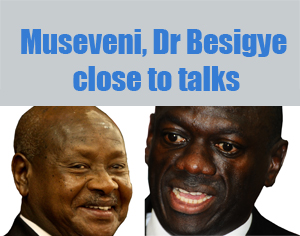
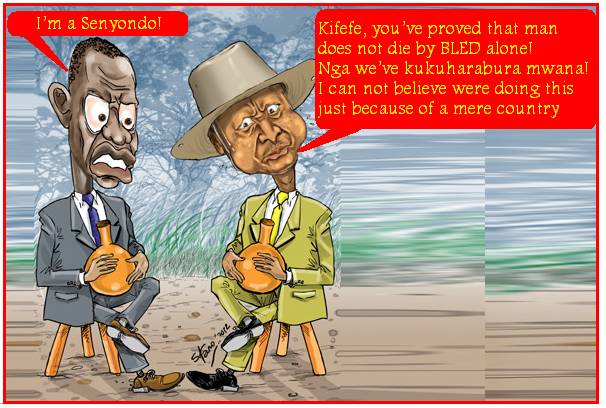
Besigye-M7 Pending talks is a ”Bone-head” idea but a bit exciting


[Edit]
The Observer front page headline on 02/01/2012

Friends, The story in the Observer about Besigye and Museveni planned talks is more like a replay of what happened between Zanu-PF and the MDC in Zimbabwe a few years ago. You remember those talks that were mediated by then South African president,Thabo Mbeki. The difference here is that Mwenda and Conrad Nkutu seem to be the big players in this whole thing which is a bit strange. I know Andrew Mwenda is a bit influential in the Museveni government but he is also someone who is not in good books with Besigye at the moment. So, anything where he is involved may raise suspicions.

It is also obvious that the story was intentionally leaked to the press to see the reaction from both camps: Besigye and Museveni’s, and the elites who read such stories published in English. So far, both sides have remained silent about it which confirms that something is in the pipeline. Even the big ‘mouthed’ Tamare Mirundi has not come out yet with his ‘bullets’ to shoot those ‘Nagendaising’ the situation, which shows that this is a big thing in the corridors of power in Uganda. The story has appeared both in the Newvision and Observer newspapers.

However, the whole exercise of these talks is a misdirected effort because the majority of Ugandans would be happy if president Museveni offers a quick time frame to step down from the presidency, but this is not something we expect from these talks. Museveni is not ready to give up power to anybody soon despite the recent Daily Monitor headline of ‘I will not stay in power forever’. The man has no intention at all to give up an inch of power, and I’m sure Besigye is aware of it, and we assume he (Besigye) is bothered by it .So what will be the basis of these talks, I wonder.

On the other hand, senior FDC officials are increasingly aware that there is a need to start planning for a political future after Dr.Besiggye, but do not quite know how to achieve that end. Besigye has already announced his intention to stand down from the FDC presidency despite his undoubted popularity among Ugandans. So, why involve himself in political deals he may not be there to supervise and see to it that they are fully implemented? Let’s say, for instance, Museveni agrees to a power sharing interim government, what will be Besigye’s and the new FDC president positions in the new government? Who will be the superior decision maker in the new government? This whole thing may ultimately weaken FDC if not handled properly.
Seriously, I don’t have a problem with the idea of talks between the opposition and Museveni government, and it is indeed encouraging to see that some people want it to happen, but there is a lot of water under the bridge at the moment- which makes it a bonehead idea at the moment.
A lot of people are in prison or exile because of the fights that have been going between these two guys, and I’m wondering if they have got any stake in these talks. Will there be an unconditional amnesty granted to all those perceived to be enemies of the state? Will all political prisoners be pardoned and let back on the street to do whatever they want before or after these talks? What about other stakeholders, such as the Mengo administration and Ssubi, which formed an alliance with Besigye in 2011 elections to see that Buganda achieves its demands from the central government? Will the Kabaka be involved in these talks? What about the religious leaders who are tired of corruption in government offices and would like the government to also get tough on homosexuality? What about those who just want to see the back of president Museveni for good as soon as possible and Besigye was seen as a representation of such feelings?

That’s why I think that the idea of talks between ‘Ajja Genda’ and ‘Mpekoni’ or ‘do u want another rap’ guy makes very little sense. Yes, looking for the “good”, or looking for the “truth” both proceed by talking and also by investigation and neither, in and of themselves, result in the creation of a sustainable political climate. However, looking for good as opposed to truth is precisely what has led Sub-Saharan Africa to its present downward spiral. Instead of recognizing truths which require little study and even less talk, western governments, media and academe have consistently tried to see good at the expense of recognizing such clear and obvious truths. The damage that this has done is just as evident and all in the service of a corrupt concept of natural equality.

If, therefore, we are to have meaningful talks between the government and opposition, president Museveni must publicly state that he is going to resign from the presidency at a specific date. Short of that, we may as well say that Besigye has betrayed the people who put too much trust in him. All the truth about everything evil this government has done must be put on the table as enough reason for the president to hang his boots as soon as possible. Truth is truth and looking the other way helps no one.

Byebyo ebyange
Abbey Semuwemba

Thursday, 22 December 2011

Besigye remains the best ‘Chocolate’ in a x-mas box and Otunu Shouldn’t fire all his enemies

Friends,
Most of the NRM mobilizers will be relieved when Besigye retires from FDC leadership because he still remains the best ‘chocolate’ in a box. Love or hate him, he is the most courageous, toughest and principled politician in Uganda history. The guy is undoubtedly the best opposition politician in Uganda’s history. He’s the best at what he does. When he talks on politics, he usually has been worth listening to more than any other FDC politician. Historians and political analysts will write endless books about him. The only thing missing in his political life is becoming the president of Uganda which he almost did in 2006 if Dr.Badru Kiggunud’s EC were not cowards. They reportedly allowed themselves to be intimidated but most political observers ‘believe’ that Besigye won those elections.

Museveni only outsmarted him in elections and I think this is the reason why he wants to retire, not forgetting the famous Gilbert Arinaitwe who liked playing with Besigye’s head using tear gas. What makes Museveni to stand out is that he thinks 10 moves ahead when it comes to rigging elections, and he planned for the presidency for a long time. The rest of the opposition leaders think two moves, and are proud of it. Museveni is probably the best politician of his generation in Uganda- at least of his NRM party; even Besigye would have to agree.

As for UPC, the way there are treating Dr. Otunu now has made me feel the slightest for them. He does not deserve to be treated this way just because he is not a Langi or related to late Obote. The smears his political enemies are now flinging mark them, not him, as beneath contempt.
Olara Otunu is the current UPC president
It’s good that Otunu has fired some of the UPC ‘rebels’ especially David Pulkol and Rurangaranga. The former chairman made it clear that that he will use whatever means necessary to incriminate the UPC president which was unacceptable. So he had to go. As for Pulkol, I have never trusted him even one little bit. He is one character that can give you a poisonous injection on the bum while feeding you a samosa at the same time. He was previously working for the Museveni intelligence system; then he moved to FDC temporarily before joining some funny political party I have forgotten. When Otunu came back, Pulkol went UPC mad with the famous bandwagon song of ‘we are coming back home’. Oh God, I couldn’t believe my eyes when I read in the paper that Otunu had given him an executive position in UPC.

Anyway, it’s good that Otunu has started learning Uganda’s complicated politics on a table very slowly. In Uganda, all surviving party leaders have been sleeping with one eye open. Otherwise, Otunu should copy some of Museveni’s ugly tactics to survive the current situation. If he doesn’t’ he is a goner not a ‘gunner’ (like Arsenal supporters). If he wants to know some of these tactics, he should freely consult me privately and I help him out, but I will charge him some fee because I need to buy presents for my daughters before the New Year. But overall, he seems to be catching up with the game.

Of course there is a limit to what Otunu can do since he is not as ‘executive’ as president Museveni. The later allegedly uses the intelligence organs and URA to obtain innuendo and political ammo against his enemies, and the police and army to harass his enemies, but otunu can do a little bit of Museveni’s tricks that are less than that to survive his enemies. USA’s Richard Nixon too used IRS to target his political enemies. Bill Clinton also reportedly used to keep files of his political enemies.

Nevertheless, I think Otunu should have kept Robert Kanusu in his team. I don’t know Kanusus personally but he seems to be a people’s person and a grass root politician. He should have won that election in Jinja if NRM had not resorted to Museveni’s ways of survival. If it is true that Kanusu too had also been comprised, Otunu should have deployed him somewhere else but kept him in his team, while at the same time keeping an eye on him. Otunu should know that not everybody in Museveni’s cabinet are his friends. In fact, he does not trust most of them. But he has got his boys that keep an eye on all of Museveni’s ministers. They are people in Museveni’s government whose job is to monitor the likes of Edward Ssekandi (VP), Saida Bumba(Gender ministry), even Mbabazi( PM), and others. The man allegedly keeps a file in his office on all his political enemies in and outside NRM. He uses them when very necessary.

Actually, if people had ears, they would not come out to publicly portray themselves as Museveni’s friends because the man has often said that his only friends are his wife and kids, and he is right. In Uganda politics, you don’t trust anyone if you want to survive for a long time. So, Otunu should forget about New York or UN politics and sort out the mess in UPC. He should not fire all his enemies as he is doing because some of them are better to be kept in the party while keeping an eye on them.

I would say it has more with keeping your friends close, but your enemies closer. For example, The Nazis and the Soviets were on opposite sides during the Spanish civil war. But why did Stalin and Hitler sign the Non-Aggression Pact on August 19, 1939? Why did they agree to the division of Poland and invaded it together? Meanwhile in the period just before that pact, Stalin had been warning all the British, the Americans, and the French that the Germans were getting to be dangerous. In addition there were elements of the German intelligence service that had been trying to work with British MI to assassinate Hitler. These German agents were ignored. The capitalists at that time thought that Nazi Germany would be a good bulwark against the Soviet Union.

Otherwise, let me take this opportunity to wish everyone a happy X-mas and new year. Besigye said recently while at Makerere University that 2012 is gonna be ‘bloody’. So, let’s keep our eyes on the ball.

Byebyo ebyange
Abbey Kibirige Semuwemba

Sunday, 18 December 2011

Dr.Gombya on Andrew Kayiira’s Death

Dr.Gombya on Andrew Kayiira’s Death

Henry Gombya
I have read with great amusement comments from Ugandans At Heart(UAH) forum. It seems there is a very hot argument about what happened to the late Dr Andrew Lutakome Kayiira and the relationship I had with him. I am going to, hopefully, once and for the last time, explain this relationship. I am not being forced by anybody to contribute to your members as I believe I have explained myself for so many years now. But this is the first time I have addressed the issue on a website.


There has been a lot of conspiracy theories regarding my relationship with Dr Kayiira. Most have been so hurting and painful to me and my family. Questions have been raised as to how Dr Kayiira came to stay at my house and not at anybody else’s. There has also been conspiracy theories that in someway, I was privy to Dr Kayiira’s finances and that when he came out of prison he wanted to know where his money was. These are pathetic conspiracies mostly engineered by those who are bent on seeing that the killers of Dr Kayiira are never brought to book.

Nobody should ever doubt how much I would like to see Kayiira’s killers brought to justice.. But every time the theory conspirators engage in telling the world that I had anything to do with his death, those who fall for their tricks help in making sure that attention is driven away from the killers and those who planned this assassination. I believe these killers (apart from those that have since died) are still roaming the streets of Kampala believing that they got away with murder. But  let me tell them this: Whatever it takes and however long it will be, one day they will be brought to justice.

As I have already explained in newspapers worldwide, TV (BBC 2 Newsnight) and on Ugandan and foreign radios about how Kayiira was gunned down in my house, I want to use this opportunity to dioscuss some of the conspiracy theories below.

CONSPIRACY THEORY ONE:

I had been taking care of Andrew’s finances and I had fallen out with Kayiira!
This is indeed a fallacy! Andrew was Chairman of the Uganda Freedom Movement (UFM). This was a big organisation that had him at the top. It meant there were many people below him holding offices as is always the case in similar organisations. I have never been a member of the UFM so I could not have held any position in an organisation where I wasn’t even a member.. To this day, all I know about the UFM is through mostly my academic research here in the United Kingdom. At the time when Andrew was alive, I did not know much about the UFM apart from what every journalist like me knew at that time.

I believe organisations like UFM have Treasury Secretary or those that look after their finances. To this day no such official has ever come forward to claim I was handling any of their monies. Can anybody believe that any organisation wanting to fund a guerrilla movement like the UFM would have channelled their aid through a journalist filing stories for the BBC, the Nairobi Standard, New African and African Concord? Anybody knows that this, for a journalist, would have made very good copy.

The fact is I have never been UFM’s financier nor has anybody ever approached me to handle its money. The last few days of Kayiira’s life were spent with friends who looked after him, bought and always paid drinks for him and fed him. While in prison, friends rallied together to collect funds to look after him and pay for his lawyers. I am happy to have been one of thiose friends who was approached for help while Andrew was in prison and I obliged without hesitation.

It should be noted here that I knew Dr Kayiira for a very short period. But our relationship was very much strengthened when he gave me protection while the NRA were shooting their way to power. We all stayed indoors most of this time particularly myself, as I was afraid to be seen on the streets. Staying in close quarters with people often brings them closer.

Therefore there is not a thread of truth  that at anytime, Andrew and I had fallen out. He liked me, no doubt and I adored him, but that is where it stopped. Our association grew when he asked me to accompany him on a tour of Western Uganda when he was Energy Minister. What Andrew was doing at that time was rare as Ugandan ministers often never asked journalists to accompany them on tours. But having lived abroad for a long time and as a university professor in Boston, Massachusetts, Andrew was doing what every politician in the West does. They take prominent journalists around with them to record what they (the politicians) are doing. Are you aware how many journalists Prime Minister Gordon Brown usually travels with? Or ho0w many are now travelling with the US President here at the G20 summit? Loads!

CONSPIRACY THEORY TWO: I was working for the NRA!

How stupid! How low can anyone go in advancing such a theory? What am I doing here in Europe 23 years since leaving Uganda if I was a NRA stooge that tricked Dr Kayiira to come and stay at my house? FACT: I invited Kayiira to my house because he had saved my life when the Okello’s threatened me. He gave me 24 hour protection until the NRA captured power and secured Kampala. Finding him squeezed into a one-bed-roomed flat belonging to his cousin, I thought that since this was the very fellow who had protected me I owed it to him to take him into decent accommodation.

My only regret is that I failed to return his favour. Contrary to the belief of those cowards who gunned him down, Andrew had no plans to stage a coup against Museveni. Those cowards know themselves. They are the ones who ahve kept quiet and not uttered a word about the many times, Andrew attempted to see Museveni after his release, saying that he could talk to the rebels who were  causing problems in the North and that he believed he could persuade them to stop fighting. But every time he tried to make an appointment with Museveni, the door was cruelly banged shut against him..

One of your bloggers thinks I was an NRA spy because I was the one who told Museveni that the Okellos had overthrow Obote. While it is true that I did tell Museveni about Obote’s overthrow, there is no truth whatsoever that I was doing this because of being an NRA spy. FACT: I called Museveni in Gutenberg, Sweden after my bosses at the BBC in London gave me his number and asked me to call him to get a comment about the Okello coup. So calling Museveni was to do with my job as a journalist and nothing to do with the spy conspiracy.

CONSPIRACY THEORY THREE: Where did I get the wealth to live in a 14.5 million house?

I have never lived in a house this expensive and I have no idea where the figure came from. The house I was renting at Gaba was at UgShs3 million a year. I was able to afford this amount because while I may have been working for Ngabo and the Star, I was already freelancing for the BBC programme Focus On Africa, a monthly stipend with the Nairobi Standard newspaper, the weekly African Concord, then based in London, articles for the New African and Africa Now magazines. These paid me in foreign currency and I was easily able to transfer this in Uganda currency and afford such a house.

The money I was paid for my work as News Editor of The Star only paid for fuel for my car. At that time I remember I was one of only about four Ugandans journalists who made most of their earnings through foreign news organisations. We were all relatively well off compared to our fellow colleagues in Uganda.

The killing of Dr Kayiira completely turned my life around.I lost so much money in contracts I had captured with the foreign media. I have had to start my life all over again. The only positive I can take from my exiled life is the fact that I have educated myself to such a degree that I am in a very good position to understand why Africa is the way it is today. Had I been in Uganda all these past 23 years, I doubt whether I would have accumulated the kind of knowledge my poor and exiled life has enable me to achieve.

Throughout this period no one seems to have taken a step back and wondered how it feels to lose a close friend and read every day of your life conspiracy theories that you could have been part of the plot to kill him. No one has had the courage to come out and speak against these theories and no one has spared a thought about my dear wife who was the last person to see Dr Kayiira breathe his last breath.  And no one seems to care what effects the killing of Dr Kayiira has had on my life and that of the immediate members of my family.
No one seems to question why some former senior ranking officers of the UFM have chosen to stay quiet and neither come out in my defence, nor speak out against me. No one has question why people like Francis Bwengye who was UFM Secretary General at first fled Uganda soon after Kayiira was killed and is now living comfortable in Kampala. No one has questioned the acceptance of ambassadorial posts by Dan Ssozi, a former close friend of Dr Kayiira. And while I have not stepped on the African continent for more than 23 years now, no one seems to question why so many have come to London and claimed asylum saying they had been Kayiira’s supporters and on getting their immigration status take the next plane back home.

When crimes are committed, the police usually look for a motive. Does anyone in their sane minds really believe that an ordinary journalist like me would have planned and carried out the killing of a leader of a guerrilla movement? I may be academically clever but I doubt whether I would have managed this assignment. It was a professional job done but professional killers. I have never been one. No one has taken much interest in comments made by a Uganda police dog handler who categorically stated that police dogs followed a scent from my house to lubiri barracks and inside, they found my wife’s handbag. Why has no onwe said anything aboyut this? What was my wife’s handbag doing at the end of the police dog scent inside Lubiri barracks? Am I wrong then in thinking that I have been purposely made a scape goat?

I hope I have given you guys something to think about and it is my prayer that you help me find who killed Kayiira. It is a job I intend to do as long as I am alive. It is a job that every peace loving Ugandan should be doing now. On his release from Luzira prison, Museveni told journalists in Kampala: “Kayiira may have been released by the courts. We in the NRA believe he was atttempting to  overthrow the government. And we will follow him. If anyone is looking for a motive, shouldn’t they be starting here?  And that is one reason I have refused to return to Uganda as I believe this can be done better while I am here. As long as the NRM is in power, Kayiira’s killers may never be brought to justice but as a historian I can only say that history repeats itself. The Museveni regime is here today. It will be gone tomorrow. And then, the search will resume on homeland.

This is the only and last time I will speak on this issue.
Regarding Ngabo Radio, I am happy to report that I will be presenting an English show every Saturday starting May 19, 2009. I am writing this while covering the G20 summit in the Excel Centre East London. I will be away for two weeks and will start the show on Saturday 19th. The show will be the English version of Tuula Twogere, the Luganda show I have been hosting for the last three weeks. We intend to bring on the show several important people to help us understand the problems we have in Uganda today. Ngabo Radio is for all Ugandans and not only for the Baganda.

It may have started with Luganda but rest assured that we want each and every Ugandan tio feel free to participate in the shows as this is the only voice at the moment Ugandans have to voice their concerns with fear or favour, knowing that after the show, they will return to their homes without having to look over their shoulders wondering whether anyone is following them. So I urge you to join in by calling the show to say whatevere they want and let everyone know about the radio.

A luta continua!
Dr.Henry Gombya
Journalist/Ugandan residing in the UK
UAH forumist

Saturday, 10 December 2011

Why can’t UPDF be like Kenya’s forces in terms of structure?

Folks,
The information we are seeking should be public as is the case in Kenya. No secrets are being spilled if UPDF were to come forward and state that the chain of command in the military is so and so.

In Kenya the structure is very clear for all. The overall Army boss is the Chief of General Staff (CGS), deputized by the vice CGS and then Army Commander, then Deputy Army Commander/Airforce/Navy chiefs. UPDF should do away with the chief of staff and go the Kenyan way with CGS. Army chief of staff in Kenya-may be there but-is not listed among the senior ranks of the army. CGS is the overall CGS for all units, army, air force and navy. In Uganda we have individual chief of staff for army (Lt Gen. Koreta), air force and so on. Now can anyone tell me how an army chief of staff is senior to the Commander of the army? This contradicts the statements made by some people that General Koreta is senior to General Katumba the land army commander!

The media should tell Major Kulayigye to learn from Kenya where he just returned from some course. He should know by now that the man who was head of the staff college he attended in Karen, Lt Gen Tuwei (a Kalenjin) was recently named Army Commander to replace General Njoroge. He is now the 3rd ranking army officer. There is clarity in Kenya which is lacking in Uganda I guess for obvious reasons.

Do the media ever ask questions to govt spokespeople or they simply take their press releases and print it? Do the media or assigned reporters ever ask the police spokesperson questions on record? What about Major Kulayigye? Do defence or amy ever hold press conferences? And if they do, have the papers and FM stations assigned reporters to cover the army, police etc? Well we have been told that UPDF is open so why not ask them to send the media houses press releases if they are too busy to talk to the media about the chain of command in descending order?

Sometime back, there was talk of reforming UPDF. What I am saying is that the current structure may not be the best. I prefer the Kenya structure for its clarity and effectiveness. In Kenya at least, the Army Commander is 3rd in seniority. That much is clear. Kenya has tried to rotate the CGS among the three units Army (current), Navy (immediate former) and Airfoce (next if rotation stays).

Kenya also has a set ratio in terms of military promotions. The ratio that must be followed is 7:2: 1 in favour of Army, Airforce and Navy respectively. I suspect that is what makes the army commander a grade above the other service commander. Is there such a ratio in Uganda?

We are interested in debating the national defence policy. Certainly UPDF could do better. Again, I use the Kenyan example. CGS serves for one 4 year term and goes home. The President may extend that if need be, but it has served the military well. All senior commanders must also retire by the age of 58. That age limit means that the recently named army commander will have to retire in 2 years. The clarity makes it easier for others to emerge and lead.

Now compare that with Uganda where people come in and out. What was the status of late Kazini for example? This business of Katebe should be ended.

I personally know a senior UPDF officer-will not say rank-who is well educated but he has stuck in the ranks for years. He wants to leave but they won’t let him go home. And yes, the chap is from South Western Uganda.

If you checked the Kenyan DOD, there are no army chiefs of staff anywhere so they must be lower the chain.

W.B.KYIJOMANYI
UAH FORUMIST IN NEWYORK

Friday, 2 December 2011

Mwenda and his Team selectively applied the Kotter’s Model in their Analysis of Besigye’s Performance

Dear Ugandans,
I like the owner of the Independent Newspaper, Mr.Mwenda Andrew, but as of recent, he has been either soiled in the banana or ‘bogoya’ republic or he has accidentally lost his touch. He nowadays tries so hard to impress those with power yet he used not be that kind of person. Anyway, let me try to use my little time and respond to some of the issues published by his editor, Weere, in his article entitled: ”How Museveni gained 10% and Besigye lost it” , views which Mwenda seems to have supported at Capitalfm political show immediately after the elections.

‘’Did Besigye make Ugandans want a change from Museveni desperately? There are three questions that answer this according to Kotter’s model’’ His paper, the independent, reported or asked.
Kotter’s model is mainly essential in transforming organizations rather than implementing changes or showing the urgency for change. Jick’s tactical ten step model is the one that deals with implementation while General Electric (GE)’s seven-step change acceleration process model deals with showing the urgency for change. I have attached a pictorial version of the Kotter’s model below to this message.

Clearly, anybody can manipulate it and make an argument either in favour or against the opposition in Uganda as the Independent did, but im not gonna do what Mwenda and his team did. I’m just gonna show that some of these theories are not applicable in a situation such as Uganda.
Kotter's Model
One of The major lessons from the Kotter Model is that change process goes through a series of phases, each lasting a considerable amount of time. So how does Mwenda expect Besigye to ‘win over outside stakeholders like other opposition leaders, the army, foreign diplomats and governments’ in a specific period of time in a situation , like that in Uganda, which does not allow change to take place any level. The way Uganda is now it is impossible to get rid of Musevenism evenif Museveni died today or lost power in an election.

Mwenda’s team rightly quotes Kotter’s model which explains that Creating short-term wins motivates employees during a long change effort, but he wrongly looks at the short term wins Besigye failed to have as :’’failure to dislodge the Electoral Commission(EC), opposition coalition, et.c. These should not be the short term wins to judge any political leader because all those were not in Besigye’s control. He could not have done more than he did before the elections.In any case, Besigye’s short term wins should be those wins he had in both 2001 and 2006 elections before the 2011 elections. I also think Kotler was particulary looking at managers of organisations who seem to be in control of the situations around them, which was not the case with Besigye. Nevertheless, I think Besigye’s failure to win the youths in elections was his own making, as this was in his control and we pleaded with FDC executive to persuade Besigye to come up with a song that would conteract Museveni’s ‘Mpekoni’, but all in vain. There was some bit of excitement created among Ugandans including myself- by listening to Museveni’s rap.

It seems that “change” is just poorly understood by some people, based on misinformed assumptions or some management theories, poorly executed or all of these. Besigye was expected to meet resistance at all levels of Kottler’s model by trying to bring change to the institutions he does not control. Besigye does not control or appoint the EC, so what better could he have done to get the EC disbanded? What better could he have done which he has not done before to win the army support? What better could he have done than what he did to unite the opposition and bring the Baganda to his side?
There were some people in the population who saw/see the need for change but they don’t want it out of fear and survival. For instance, some Ugandans fear that president Museveni will plunge our country into violence if anybody, other than him, wins an election. As Lewin( 1958) explained change happens if Ch = f(D x V x P) > Co. Change (Ch) takes place if the Dissatisfaction (D) with the status quo, multiplied by a Vision (V) of the future, multiplied by agreed Processes (P) that remove obstacles blocking access to the desired state is greater than the Cost (Co) of change. The way things stand change cannot come to Uganda through so called elections because the ground for free and fair elections is not there at all. There are some countries in East Africa,particulalry Kenya, that have moved a step to better elections because the institution such as the EC are fairy independent.There is nothing like a Kenyan president appointing the head of the EC as is the case in Uganda.Rigging in Kenya might have ended with the Kibaki presidency going by the way the Kenyans have set up their system now.

Therefore, when one deeply analyses all these theories, one finds that Dr.Besigye actually tried to do exactly what the models are telling managers of organizations to do. He could not have done it in any better way. Those criticizing him now have got their own intentions but could not have done better. Most of these management theories are a fallacy when it comes to practice and I normally compare them to love making between a man and woman. Theoretically, everybody has got an idea on what they are supposed to do in the process of lovemaking but practically the results tend to differ among different couples. So, it would not be wise for any of us to go on a blame game just basing on theory without looking at the reality of the situation.

Money in the campaigns
Money is a big factor in any election anywhere in the world. A candidate with money has higher chances of winning the election. The returns from such an investment are undisputable. However, president Museveni clearly used national coffers to campaign and that itself is not only illegal but it is immoral. It was a clear sign that the incumbent was not ready to hand over power and was willing to operate outside the law to achieve his aims. That’s why some of us called this election a ‘remote control’ election where the incumbent was capable of ‘organizing the event, choosing the dancers and master of ceremony’ throughout the process, with the inner knowledge that the situation was favoring him more than his opponents.

Opinion polls
An opinion poll is something that should be taken seriously in any free and fair election. I’m saying ‘free and fair’ because I don’t think this was the case with the just concluded presidential elections in Uganda. For instance, in USA, during the first two years of the Reagan administration, information from opinion polls was discussed in more than half of the senior staff meetings of the White House. Richard Wirthlin, the pollster met with Reagan more than 25 times just to discuss polls.
Actually, almost all USA presidents had their own pollsters: Roosevelt had Cantril, Kennedy had Harris, Johnson had Quayle, Ford had Teeter, Carter had Caddell, Reagan had Wirthlin, while Nixon used most of them. This is because the opinions of the population are something that leaders of the developed nations take seriously before they make any decision.

But in Uganda’s case, with or without opinion polls, president Museveni is not bothered with the opinions of the people of Uganda. For instance, removing presidential term limits was unpopular policy among Ugandans, even within his own party, but he went ahead and removed them. He has been sending our troops to fight on foreign soil regardless of how people feel.

So what is the meaning of holding opinion polls in an environment where the incumbent has got no respect for people’s opinions? So the Afrobarometer polls might have been a reflection of a society that is still caught in fear and survival rather support for president Museveni. Secondly, opinion polls tend to be manipulated by some leaders depending on what they want out of the situation, and they tend to do it differently. For instance, In the 1970s, Harris and Gallup were the giants of the polling industry. Because of their prominence, they attracted Nixon’s interest and became prime candidates for attack and manipulation by the administration. Therefore, I would not be surprised if president Museveni or his team had a hand in the Afrobarometer polls one way or the other, and may be that is why the opposition did not take them seriously and ‘’ buried their head in divisions’ as reported by Andrew Mwenda and his team. Who can blame them, anyway?

The truth is that we shall never know who genuinely won the 2001, 2006 and 2011 elections because the ground for elections was not free and fair. Yes, Uganda is not like Belgium for us to have totally free and fair elections, and this alone is enough for us to discard all arguments made by some people showing that Museveni won the 2011 elections fairer compared to the 2006 elections- just because there was less violence in them. Text-book theories, such as those put forward by Mwenda and his team, are totally inapplicable in this case. We cannot work out the percentage of rigging based on assumptions of violence and nonviolence when the ground for free and fair elections was not there in the first place.

Abbey Kibirige Semuwemba
source:  http://semuwemba.wordpress.com/2011/03/13/mwenda-and-his-team-selectively-applied-the-kotters-model-in-their-analysis-of-besigyes-performance/

ICC is good for Africa but Bad for dictators

ICC is good for Africa but Bad for dictators


International Criminal Court logo
Dear Africans,
We have got to support the existence of the ICC because Africa is the top beneficially compared to other countries due to the number of dictators on the continent. The treaty which created the ICC is not even as old as Museveni’s regime or Kony’s war in the north because it was adopted in 1998 at an international conference in Rome after intense negotiations. So why should we start discarding it before It has been tested enough.

The ICC is an important deterrent to those that are committing crimes on the continent. At least, every sitting African president knows that there is now an arm of law that can touch him before he leaves the presidency, if he commits crimes against humanity. We used to have ad-hoc war crimes tribunals (modelled on the Nuremberg trials of Nazi officials following World War II) ,like the one that tried the former Yugoslav president Slobodan Milosevic at The Hague and the Kagame courts in Rwanda that tried genocide criminals, but they were not as legally and internationally pronouncing as the ICC. The ICC is the first new international judicial body since the International Court of Justice, or World Court, which was created in 1945 to adjudicate disputes between states.

The only reason why some people  fear this court is because they assume that the West can use the court against developing countries and the presidents they support. This is the same fear Asian countries had before putting their signatures on the treaty. That is why most of the Asian and African countries delayed signing it. For instance, during the war in Kosovo, hundreds of thousands of ethnic Albanians were raped and murdered. NATO intervened and conducted an 11- week aerial campaign against Yugoslavia that ended the ethnic cleansing. Surely war crimes were committed but it ended with the extradition of Slobodan Milosevic not USA’s Bill Clinton. The same has happened in Libya when NATO intervened to save the Libyans from being killed by Late Muamar Gaddafi. Gaddafi son, Seif, is among those that are likely to be paraded infront of ICC courts if the Libya’s NTC allows it.

Nevertheless, the ICC is regarded as a major step forward in most of the world though it is derided in mainly western nations.  No one claims it is perfect, but there are many safeguards. The ICC is based in The Hague and those it convicts can be held in prisons in any of the signatory states. Being used by western nations to push their interests in Africa and elsewhere may be wrong but isn’t that an aspiration worth making a tiny risk for? Who does not want to feel free and safe in their country without these dictators making it hard for everyone?

People with such fears have got a point because the west dominates almost all international bodies but given a choice, i would rather see the ICC help us get rid of the dictators, and then we sort out the west lateron. Atleast, we already know that the great nations are using Africa using different international organs but this does not mean that we have to get used to having dictators on our continent.

Let us also note that Prosecutions in the ICC are only valid if national courts are unable or unwilling to prosecute serious crimes. And only a nation ratifying the treaty can make a complaint against its own citizens or those of other nations for crimes committed on its soil. For instance, the International Criminal Court had no authority over events in Ethiopia or Eritrea, because neither country had ratified the treaty creating the tribunal. Israel signed it but not ratified. So ICC cannot touch Israel despite committing crimes against humanity in Palestine. Egypt, Iran and Syria signed. India, Pakistan and China neither signed nor ratified. Russia signed but not ratified. I know that Uganda signed but I’m not sure whether it ratified it. Most democratic nations and all European Union countries signed and ratified the treaty. In the USA, Former President Bill Clinton signed the pact in December 2000 but  President George W. Bush renounced it in May 2001. Let us hope that Obama will do the needful and get USA back into ICC before he leaves the presidency.

To be honest, I don’t know why Bush pulled the USA out of the ICC. First, the ICC is strictly prescribed to only atrocities that are spelled out in its treaty.  Second, the ICC can’t actually go and arrest people unless they are given enforcement power to do so, which requires a vote of the United Nations Security Council.  The US has a veto there, so there is no threat to Americans.  Third, even if a third country voluntarily arrests and extradites an American to the ICC, the Security Council can intervene on individual cases. The point is pretty clear: the ICC isn’t something that can harm USA; it only will focus on precisely defined war crimes and crimes against humanity.  It isn’t the monster idiots like what some people claim it is.  The US is going against the world community by not participating in a court to deal with those crimes. If USA was part of the ICC, it would have made it stronger. It is for this reason that I see no point in the ICC dragging Britain, Russia, China or any of the countries that permanently sit on the Security Council in courts of law because they can easily overpower any form of extradition.

I am not an expert in constitutional law, but I do know that the Constitution recognizes that state crimes are the jurisdiction of state courts.  Of course, the rights of the Constitution continue to hold, and if we had federalism in Uganda, certain “due process” would be recognized to be the jurisdiction of Buganda or Bunyoro or Busoga courts.

It seems reasonable that the Constitution be interpreted consistently. Things of a state are the jurisdiction of the state. Things of the world could  be the jurisdiction of the world.  Perhaps more knowledgeable men than myself might work out the details of a treaty recognizing world courts and establishing the review process by treaty. By the way, I don’t know what court you appeal to after being found guilty in the ICC. May be the lawyers reading this can help us on this one.

However, what we must know is that the war crimes tribunal was created as a court of last resort, and its mandate is to only step in when countries are either unwilling or unable to dispense justice themselves.  This means that Ugandans or president Museveni cannot be prosecuted over Kony war or any crimes committed in Uganda if the mechanism to prosecute war crimes already exists within the Uganda judicial system.  So I ask  anti-ICC to stop misrepresenting the court’s concept or to continue arguing that it will be used for frivolous and/or politically motivated prosecutions.   Once and for all, the whole concept of an International Criminal Court does not in any way contradict our African/Ugandan ideals. Every Ugandan wants to see justice done fairly but unfortunately we cannot see true justice in our own courts of law.

Byebyo ebyange
Abbey Kibirige Semuwemba
SOURCE:  http://semuwemba.wordpress.com/2009/02/25/icc-is-good-for-africa/

Saturday, 19 November 2011

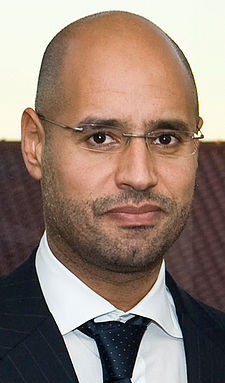
Saif Al-Islam cannot get a fair trial in Libya yet he deserves one


Dear folks,
Saif Al-Islam is in the hands of the Libyan authorities but I don’t think he is enjoying his food right now. A lot of people may not understand why I still support NTC after the way they handled Gaddafi on capturing him but let’s give them more time. To be fair, they are doing better than some people expected.  Yes, militias are still independently controlling some regions but I’m still optimistic that the situation will change for the better. I’m not like the owner of the Independent Magazine, Andrew Mwenda, who has been exaggerating on capitalfm from the start that Libyans will slaughter themselves as it is in Somalia, as soon as Kaddafi goes. These guys seem to be a bit more organized and nationalistic compared to the Iraqis after the fall of Saddam Hussein or Afhaganistanis after the fall of the Taliban.

I'm, however, a bit worried that Saif Al-Islam may not get a fair trial in Libya because there are a lot of emotions running deep in the country as far as the Gaddafi family are concerned. The ICC still has an upper hand over this if they sense that Saif may not get a fair trial in Libya but the international laws allow the host country to try their guy first if they assure the ICC that he or she will be given a fair trial.

Let us also remember that ICC lost some kind of credibility as far as project ‘Saif-Al-Islam’ is concerned. The court was viciously ridiculed by critics after it “confirmed” Saif’s capture by rebels in August, saying it was in the process of bringing him to The Hague for trial. He embarrassed them when he appeared in a Tripoli hotel — supposedly under rebel control —later that day to lead a crowd of cheering supporters and foreign journalists on a tour of the city.

 I don’t know which kind of evidence the ICC or the Libyans have got against Saif but by the look of things so far, it looks like the evidence is not as strong as the one Ugandans have reportedly got against our first son, Muhoozi Kainerugaba. Gaddafi tried to keep him away from military affairs as he was mainly responsible for the financial management of the country’s affairs rather than military or intelligence. It was the other brothers that were reportedly more involved in military and intelligence affairs.

That's why I still think that president Museveni made a mistake to involve Muhoozi in the military because it is very easy for anyone to build a case against you if you are involved in matters of life and death. Already people are saying he is responsible for the death of people at Kasubi tombs and somewhere in Karamoja, and it’s kind of difficult for any judge to rule against that if your father is no longer in power. Judges are human beings like anybody else, you know.

So, I think Saif should be handed over to ICC but that is a real dream because there are people who want to see his neck on a platter. Even the two tribes: Gadhafi and Waffala tribes, that highly protected him, cannot protect him anymore while in Libya.

There is an argument that people like: Osama Bin Laden, Saddam Hussein, Gaddafi and their sons will never have a fair trial anywhere in the world. The end result is always the same: death. So, instead of wasting people’s time and money, they are usually eliminated on the spot. They are usually assassinated as soon as troops find them hiding in some cave, drainage or house somewhere. For instance, Saddam’s sons were shot down on the spot but their father got a ‘fair trial’ that ended with his death. The Saddam supporters could not argue that he did not get a fair trial; after all, he continually received 100 percent of the votes during Iraqi elections.  They loved him there!  On the other hand, Gaddafi and two of his sons were killed on the spot but Saif Al-Islam may also end up with another ‘fair trial’ with the same predicament as Saddam’s if he is tried in Libya.

What do you think would be the reaction in the U.S. if Osama bin Laden got a smart lawyer like USA’s Johnnie Cochran (RIP) or Uganda’s David Mpanga, and got himself acquitted like O.J Simpson. It is possible for anybody ‘guilty’ to walk out of the court ‘not guilty’ with a good lawyer. There is something in legal terms called "exclusionary rule" where even perfectly good evidence can be thrown out on the basis that it was illegally obtained. I don’t know whether we have got this too in Uganda but it is common in developed nations. A murderer who confesses his crime can still be acquitted simply because the cop forgot to read him his rights first.

Nonetheless, I personally still think people deserve a fair trial whatever the circumstances and I can’t see Saif Al-Islam getting one in Libya. Let us examine one historical trial in USA where Alger Hiss, an American lawyer who was one of the founders of the UN, was accused of being a Soviet spy in 1948 and convicted of perjury in connection with this charge in 1950. There was massive government misconduct against Hiss, including: 1. An FBI agent who knowingly lied on the witness stand, 2. the withholding of evidence by the FBI which would have acquitted Hiss, and 3. the infiltration of the Hiss defence team by the FBI. The Hiss defence team contained an FBI informant.

If any of these three major areas of government misconduct had come to light at the time, the Judge would have declared a mistrial and he probably would have prohibited any further prosecution of Hiss by the government. The single witness against Hiss, Whittaker Chambers, had changed his story many times, including his grand jury testimony, in effect making him guilty of perjury, had the government prosecuted him.  

Hiss spent the rest of his life trying to clear his name,  and struck pay dirt with the Freedom of Information Act,  when, in the mid-1970s, the knowledge of government  misconduct at his trial became public. Courts reversed his disbarment and he was allowed to practice law again.

Unfortunately for Hiss, when his case finally reached the Supreme Court, it was loaded with Nixon appointees.  Rather than confirm Nixon's deceit in convicting an innocent man, the Supreme Court let the Hiss conviction stand. Hiss died shortly thereafter (in 1996).

 So, we all need a fair trial whatever our backgrounds. Hopefully, Ugandans treat the Museveni family fairly in case the Libyan experiment becomes a reality in Uganda some day.

Byebyo ebyange

Abbey Kibirige Semuwemba